

You have no items in your shopping cart.


Tails
Making pet parenting easy
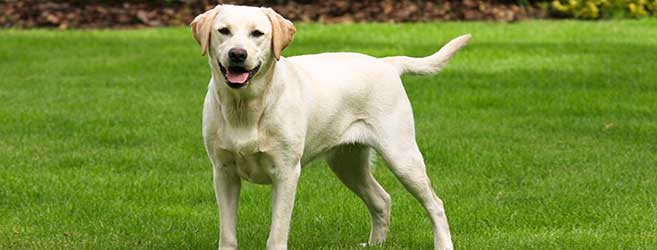
Labrador Retriever
This entry was posted on 2014-07-03.
Throughout the world the Labrador Retriever has been regarded as the most suitable dog. This breed earned the title of “gun dog”, as it is specially suited for hunting and often trained to hunt with gun sportsmen. As they are remarkable working companions they are used for various purposes, personal protection and physical assistance. Its friendly temperament and loyalty to its owner make it an incredible pet.
Personality and Temperament
The Labrador Retriever loves to wander and has a powerful hunting instinct. If trained properly they are active, but obedient and calm. As retrieving and swimming are their favorite activities they make wonderful hunting and swimming companions. They are very keen to learn and get along well with children, other animals and just about anyone they encounter. Regular exercise is a must to keep them happy and fit. This temperament makes them a very well suited breed for families but not a great choice for a guard dog.
Traits:
• Other names: Labrador
• Nickname: Lab
• Weight: Males: 29–36 kg, Females: 25–32 kg
• Height: Males: 57–62 cm, Females: 55–60 cm
• Coat: Smooth, short, dense and straight
• Colour: solid black, yellow or chocolate
• Litter size: 5-10 puppies
• Life span: 10-12 years
Physical Characteristics
The Labrador is classified as a working dog because of its heavily built body, square proportions and strength. One of its signature features is its strong jaw set within its broad head. Their strong shoulders and legs allow the Labrador to run at a fast pace. The double coat is short, straight and dense, the under coat is soft and thick and the outer coat is a bit coarse. This coat makes the Labrador completely waterproof. The Labrador carries itself upright in a proud manner, which gives it a specific grace. Their friendly facial expression endears them to their human families and makes this dog very easy to approach.
As the Labrador has many different uses it is categorized by lines, which are destined for slightly different purposes. In shows the Labrador is purely bred for perfection in appearance. In terms of hunting the Labrador is prized for its usefulness. It has an incredible sense of smell, is able to catch game because of its speed, can handle cold water and serves as a devoted companion to its owner. The field trail Labradors aren’t bred for appearance but rather for energy, intelligence and speed. Their appearance isn’t that of a traditional Labrador, (smaller head and trimmer), and it’s agreed that this breed is just a bit to eager for the average dog owner. They require a much larger space to move around in and a lot more exercise.
Amongst all Labradors the family Labrador is most popular. .This line was bred for gentleness of temperament, a balance of energy with self-control, acceptance and intellect. No matter the difference in lines each Labrador is meant to comprise of the same characteristics that made them a working dogs: strength, endurance, balanced structure and spirit along with the ability to retrieve dependably.
The Labrador Retrievers coat colours can be chocolate, black and yellow. The colour of the nose should be the same colour as the coat. All these colours aren’t accepted as purebred Labradors as they are a result of crossbreeding. The eye colour that is accepted is hazel or brown for chocolate coloured Labradors and brown for yellow and black haired Labradors. The eyes should give off an impression of kindness and intellect.
Care
Their coat, which is water-resistant, is also designed to be rubbish and soil resistant. Therefore the grooming for this breed includes a weekly brush and a wash now and again. This grooming isn’t completely necessary as the coat is designed to naturally take care of itself.
One thing about this breed to keep in mind is the fact that they are prone to retain weight. This may occur if it’s given to many treats or if it’s sitting too often. Obesity is one of the most common health problems seen in Labradors today. Healthy Labradors should be trim and hourglass in shape.
Labradors don’t mind living outside in a doghouse but prefer to be close to people inside, most of the time.
Health
The life span of a Labrador is about 10-12 years. The main health conditions that affect the Labrador are canine hip dysplasia (CHD), patellar luxation and osteochondritis dissecans (OCD). They can also suffer from exercise-induced collapse, distichiasis, muscular dystrophy, diabetes, entropion and tricuspid valve dysplasia. Some other slight health concerns include central progressive retinal atrophy (CPRA), retinal dysplasia, hypothyroidism, cataract and hot spots. The tests that should be included in a general check up are hip, eye, elbow, and knee.
History & Background
Today's Labrador Retriever originated from a popular retrieving and fishing dog found in Newfoundland and Labrador, which is an Atlantic coastal province in Canada. Originally there were two types of Newfoundland dogs (greater and lesser); the size was the main trait that differentiated the two.
The smaller Newfoundland had a smooth coat, was black in colour and medium in size. Suited for pulling heavy loads the second type was much larger. The smaller Newfoundland’s were preferred among fishermen as they were very affectionate towards their owners, great at fetching nets/fishing lines and delivering them. The natural physical traits that the two sized dogs share were also a great benefit to the fishermen. They both have a two-layered coat (top coat repels water), webbed toes and a tail, which serves as a rudder when swimming because of its broad base.
The Newfoundland dogs lost popularity when Canada began to tax dog owners. During the 18th and 19th century they became popular among Britain bond travelers. The smaller Newfoundland’s grew in popularity and in 1903; it made its way into the English Kennel Club and along the way gained the name Labrador Retriever. In this time the breed was more refined particularly for its devotion to humans, good manners and retrieving game for hunters. (Well known for taking care when catching game and not damaging it)
In 1917, the Labrador Retriever was accepted into the American Kennel club, and has grown in popularity. Today it is the incontrovertible leader in canine household companions.
Nutrition
Click here to see what breed specific pet food we sell now.

